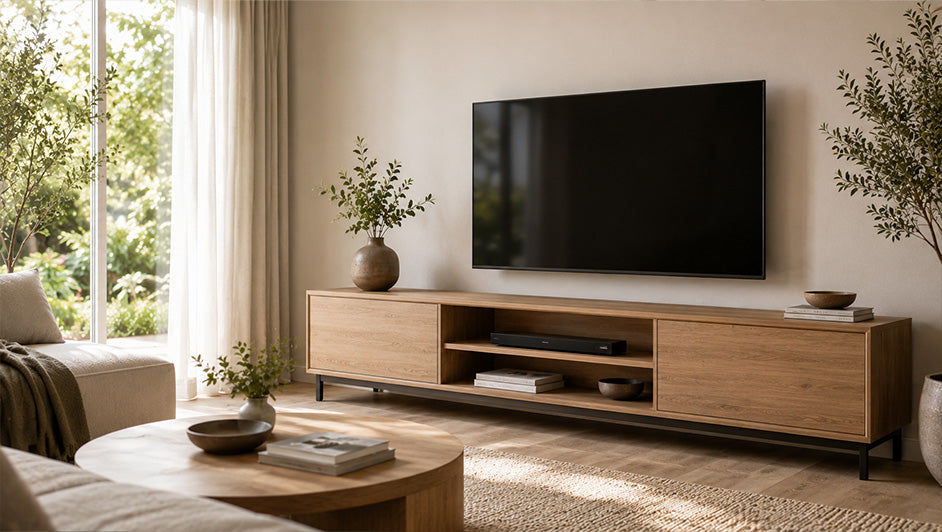
Living rooms are the centres of entertainment and relaxation for the family and a place where you can showcase your style. The centrepiece of the room should be the television entertainment unit, which serves as a natural focus point of the room. It might be easy and fun to choose a unique piece of furniture from the Cassa Vida Entertainment Units; however, the combination of that wooden TV unit into the whole room through matching it with the rest of the components of the room becomes important.
Matching furniture does not require that all pieces be the same in their design and colours; rather, it requires the knowledge of the undertones, balance of textures, and conversation of wood tones and other surfaces. This guide will help you match your wooden TV unit with the other basic elements of your living room.
How to Match Wood with Living Room Furniture

Buy Jaya 2.15m TV Entertainment Unit - Light Walnut | Cassa Vida
With the introduction of any solid wooden or television stand, you will be adding warmth and an organic feel to your room. However, in case there is a basic tone conflict between the unit and the floorboards or the wall colour chosen is such that the stand simply merges with the wall, then the room may start feeling too heavy. You need to consider material coordination so as to guarantee that your furniture blends well with your room's architecture.
Interior design involves the use of contrasting features while at the same time keeping consistency in mind. The process requires understanding how light is working within the room together with the range of colours for your floorboards, furniture and wall decorations before settling on an appropriate wooden entertainment unit. For more advice on how to plan your room space, have a look at some of the Cassa Vida Living Room Size Guide tips.
Decoding Wood Undertones: Warm, Cool, and Neutral Bases
Before you pair up your TV stand with other surfaces, you will need to determine the main undertone of this piece. The undertone of furniture is not a single colour but a slight variation in its overall colour.
|
Undertone Category |
Common Material Examples |
How It Looks |
Best Design & Palette Pairings |
|
Warm Undertones |
Honey oak, classic walnut, teak, mahogany, and warm veneers |
Exhibits red, yellow, or orange undertones that radiate natural cosiness and depth. |
Pairs beautifully with earthy palettes, terracotta accents, and warm-toned leathers. |
|
Cool Undertones |
Ash, whitewashed timber, grey-stained finishes, weathered driftwood, and cool laminates |
Leans towards grey, taupe, or stark white bases with clean, crisp visual qualities. |
Evokes a modern, Scandinavian, or coastal aesthetic when matched with cool greys and blues. |
|
Neutral Undertones |
Natural maple, select standard oak finishes, and balanced synthetic composites |
Sits comfortably in the middle without extreme red or grey dominance. |
Very versatile, it adapts smoothly to almost any transitional design scheme. |
Matching Your TV Unit with Flooring
Your flooring is going to cover the greatest area in your living room, which makes it the first and main point to take into account while adding an entertainment centre. You want your entertainment centre to match your flooring.
Matching Your TV Unit with Timber Floors
In case you are using genuine timber or laminate flooring that is of high quality, matching the grain pattern can be quite challenging:

Widden Timber TV Entertainment Unit - 210cm
-
Make Sure That You Have a Contrast: A medium brown entertainment unit on a medium brown floor would make the whole room blend in and look very boring. Instead, you need to guarantee that the contrast has two different shades. In case your floor is dark walnut, you should choose a lighter natural ash or white entertainment unit. And in case your floor is light coastal light wood, your entertainment unit should be rich, dark walnut.
-
Undertone Matching: If the undertone of your floors is warm red or yellow, it’s important that your entertainment unit has the same warm undertones, even though the shade may be different.
Choosing a TV Stand Combination With Tiles, Carpet, Or Concrete
-
Carpet: The best carpets for neutral shades like beige, soft grey, and charcoal create a palette of their own. Television stands will show up really well against carpets, but consider the baseboards and door frames to keep things balanced.
-
Tiles or Polished Concrete: Cold, hard materials such as grey tiles and concrete will be enhanced by a timber or media console in the living room. Natural oak or walnut furniture will bring warmth to concrete environments.
Pairing Your TV Unit with Your Sofa Fabric and Color
A sofa is likely to be the largest item of upholstered furniture that serves as a perfect visual balancing element of your wooden entertainment unit.
El Niño 2m Veneer Top Entertainment TV Unit - Black
-
Matching Grey Sofas: Grey is one of the essential colours for any contemporary Australian living room. When you have a cool grey upholstery sofa, go for natural ash, white oak, or whitewashed wood entertainment units to preserve a modern and airy interior. For a striking contrast, select a dark walnut or black wooden cabinet for a stylish finish. More details can be found here: Matching Your Entertainment Unit with Living Room Furniture.
-
Balancing Leather Sofas: Leather furniture tends to bring a lot of heaviness into the interior due to its texture and warmth. Tan or caramel leather sofas will look amazing paired with matching wood finishes or contrasting with a matte white and wood combination.
-
Textured beige, cream, or linen sofas: Neutral linen sofas will fit well into organic textures like natural oak, light walnut, and rattan-decorated wood units.
Balancing the Wooden Unit Against Wall Colors
The colour you use for your walls determines the overall tone of your living room. How the entertainment unit fits in with your wall depends on the style you are looking for. You can get an entertainment unit which is coordinated with your wall or one which contrasts.
1. Light and Neutral Walls (White, Soft Beige, Pale Grey, Warm Ivory)
Walls with light colours will reflect natural light, thereby making your small living room appear larger. While installing entertainment units on light walls, you can play with colours, texture, and contrasts in order to create the appearance you desire.
-
Creating a Focal Point: An entertainment unit made of natural oak or dark walnut will bring warmth to white or pale grey walls. In contrast, the room will not look empty or cold. Besides, you can complement the entertainment unit with framed artwork and floating shelves, matching the unit in finishing.
-
Creating a Minimalist Design: If you are after a Scandinavian or minimal design, then you should select a light wooden finishing for entertainment units, such as ash or white oak. Moreover, light timber finishing of white cabinetry will make the room feel more spacious and airy.
-
Using Bright Finishes: White walls will work well as an excellent backdrop for high gloss and matte white media consoles. If you are looking for different ideas that use finishes with clean and bright looks to enhance light in small apartments, here is some information on Why a White TV Unit Could Change Your Room. A white unit on a soft beige wall will create a tonal and layered effect.
2. Dark or Bold Accent Walls (Charcoal, Deep Navy, Forest Green, Midnight Blue)
Dark walls create a cosy, dramatic, and stylish atmosphere. Since they absorb more light, choose your entertainment unit carefully so the area does not look too dark.
-
Creating Strong Contrast:
Choose a light-coloured entertainment unit if you want it to stand out. Natural ash, pale oak, or whitewashed finishes create a strong contrast against navy, charcoal, or forest green walls. This makes the unit a clear focal point in the room. -
Creating a Dark, Matching Look:
For a more dramatic style, pair dark wood such as walnut, smoked oak, or black-stained timber with a dark wall. To keep the unit visible and avoid making the room look too dark:
-
Add Layered Lighting: Use warm LED lights behind the unit or inside open shelves to create a soft glow.
-
Use Metallic Details: Brushed brass, matte gold, or black handles and legs can add contrast and reflect light.
-
Add Light Decor: Use light-coloured vases, trays, books, or green plants to break up large areas of dark colour. With the colours of your home, including matching wood tones with your floor, complementing the sofa fabric with your unit, and aligning it against your selected wall colours, your ordinary living room space can turn into a professionally decorated place.
Whether you select something modern and simple with a light Scandinavian look or something elegant and cosy like a dark walnut finish, finding the balance between textures, sizes, and colours matters. Get yourself an ideal TV unit among the various high-quality assortments offered by Cassa Vida.
Frequently Asked Questions (FAQs)
1. Is there any possibility of mixing different wood tones in one living room?
Yes, but do it wisely. Stick to two main wood tones only within the limits of your space and confirm their similarity in undertone families (like a warm oak TV unit combined with a warm walnut coffee table). Balance big wooden blocks with some neutral rugs, leather sofas, or metal accents.
2. Should my wooden TV unit have the same tone of wood as my dining table if they are located in the same area?
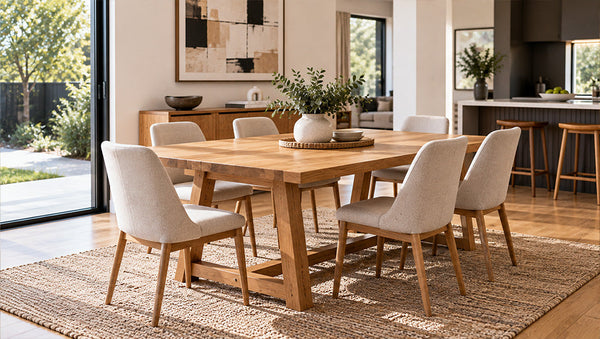
In the case of the open-plan Australian homes when the living room and the dining area share one visual field, you should stick to matching or smoothly complementary wood finishes. At least, make sure they are equally warm or heavy in grains.
3. How can I make my heavy wooden TV unit look lighter in a small space?
Go for low-line furniture with slim legs or a wall-mounted floating design. Revealing the TV unit will reveal more of your floor and visually reduce its weight, thus enlarging the feeling of your living space.
4. What is the right wall colour for a dark walnut entertainment unit?
Neutral, warm beiges and sage green walls are perfect for highlighting such furniture.