Some furniture you buy for a season. A dining table you buy for a lifetime. It's where breakfast turns into homework, where laptops open after dinner, where the biggest conversations of the year tend to happen, which is exactly why it deserves more thought than a lamp or a throw pillow ever would.
Choose well, and this is a piece that only grows more characterful with time. Choose in a hurry, and you end up with something that wears out too soon or never quite belonged in the room to begin with.
This guide explains the decision in the order that matters most: choose the wood first, then the size, and finally the style. Many people regret their choice when they focus on style first and do not consider the basic details. If you want to see these ideas in real furniture, you can also browse our Timber Dining Tables collection while reading the guide.
Understanding Your Timber Options: Solid vs. Engineered
Before choosing the shape or finish of a wooden table, it is worth understanding how the table is made. Not all wooden tables are built in the same way. The choice between solid timber and engineered wood with veneer can affect the cost, weight, care needed, and how the table looks as it gets older.
-
Solid Timber: Made entirely from natural wood. Nothing quite matches the natural grain and unique look of solid timber. Every knot and colour variation is different, making each piece unique. Because the table is made from timber throughout, scratches and marks can often be sanded and repaired many times over its lifetime.
-
Engineered Wood with Veneer: Made with a strong core, such as high-quality MDF or particleboard, covered with a real layer of natural wood veneer. This option gives you the warm and natural look of timber while helping reduce problems such as warping and splitting that can happen with changes in Australia's climate.
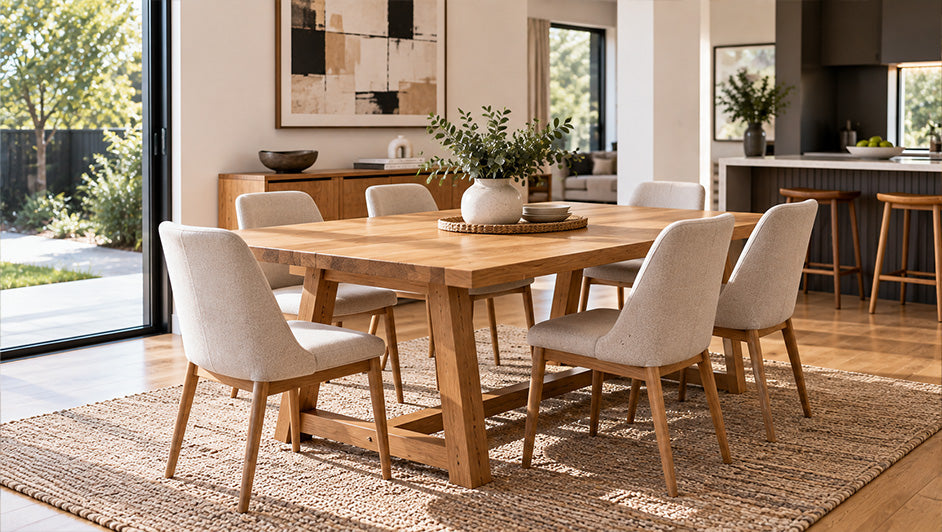
The perfect real-world example of this state-of-the-art engineering is the Marty 2.2 m Wooden Dining Table - Natural. Featuring an extremely durable engineered wood base covered with the natural oak veneer and manufactured using the strict E1 indoor air quality standard, the Marty collection highlights the luxurious appearance of the heavyweight furniture with the soft rounded corners and thin strip design.
Solid Timber: Pros, Cons, and What to Expect
Choosing solid wood means choosing a traditional material and a table that can last for many years.

Western Solid Timber Dining Table
-
Built to Last Generations: Solid wood can age well instead of wearing out quickly. Scratches, dents, and even sun damage can often be sanded and repaired, which means the table you buy today could still be used by your children in the future.
-
It Changes With the Climate: Solid wood is a natural material, so it can expand and shrink when humidity changes. Australia's changes between summer and winter, as well as the use of air conditioning and heating, can cause some natural movement. This is normal for solid wood and does not necessarily mean there is a problem with the table.
-
Natural Character: Knots, sap marks, and differences in the wood grain are natural features of solid wood. They are not defects. If you want a completely even surface, you may need to spend more time looking for a suitable piece. However, these natural details are what give each table its own character, so no two tables will look exactly the same.
Engineered Timber & Veneer: A Practical Middle Ground
For most homes, engineered wood with a genuine timber veneer offers a good balance of style, practicality, and price.

Marty 2.2m Wooden Dining Table - Walnut
Built to Keep Its Shape: An engineered wood core is less likely to bend or twist, helping the table keep its shape over time. This can be useful in homes with strong sunlight or air conditioning, helping the joints and extensions stay in place through years of everyday use.
What E1 Standards Mean for You: An E1 rating means the material has low chemical emissions, which can help support better indoor air quality. This can be an important detail when children and pets spend a lot of time around the table and can also give you greater peace of mind when having guests over.
The Beauty of Real Wood, Without the Extra Weight: A real wood veneer, such as oak, walnut, or ash, gives the table the warm look and natural grain of timber without the weight and sensitivity of a solid wood slab. It can be a practical way to bring a high-quality wood finish into your home without paying the higher price of a fully solid-timber table.
Sizing Your Timber Dining Table to Your Space
Once the type of wood has been determined, the size of the piece becomes a defining factor that determines other decisions. Typically, a person should expect to allocate 60 – 70cm in table length per sitting person, which means that a table for six guests should be 180cm in length, while a table for eight to ten guests would have dimensions of 220-280cm.
Typical table height in Australia is about 75 cm, which corresponds to typical chair height. Therefore, when purchasing a dining table that is used with separate chairs, it is necessary to verify the compatibility of both.
Leave around 90cm of open space around the table so chairs can be pulled back easily and people can move around comfortably. Measure the room properly instead of guessing the size. This will help make sure the table fits well and does not make the space feel awkward or crowded.
Choosing a Shape That Fits Your Room and Household
The form of the dining table sets the tone of the discussion during family dinners and the space efficiency of the area.
-
Rectangular tables: Classic option for narrow interiors and bigger families. Provide the best linear seating and perfectly complement large open-space dining areas. Besides, the rectangular table will fit well against the wall and along the kitchen island when not in use.
-
Round and Oval Tables: Ideal option for small square spaces. Without any corners, such a shape makes traffic more comfortable and allows for an open and family discussion since each member of the family will be able to see and talk to others. Also, a round table makes it easier to push in an extra chair when it is the holiday season.
-
Square Tables: Perfect only for specific, symmetrical dining rooms. Such a shape creates a close and dramatic atmosphere; however, it requires a lot of free space. The square table has even sides, which allow it to be seated at equal distance from the centre.
For better comparison of different geometric options, finishes and sizes, check out the Cassavida Dining Tables Collection.
Matching Style to Your Home
Timber dining tables come in a few main styles: traditional and country designs with natural wood surfaces; classic designs with detailed panels and curved legs; modern tables with simple, clean lines; and Scandinavian-inspired designs with slim tops and simple, angled legs.
The finish is just as important as the shape. Black oak adds a bold look and works well with modern, black-and-white interiors. A natural finish creates a warm and welcoming feel, while lighter oak colours suit simple and clean spaces. The same table shape can look very different depending on the finish, so it is worth considering this before making your final choice.
Caring for a Timber Dining Table Long-Term
Basic weekly maintenance really does make a huge difference; just take the time to wipe down the timber surfaces using a soft, slightly wet cloth to get rid of any dust, and make sure that you don't leave your table in direct sunlight for extended periods of time because this can result in the fading of a timber tabletop in the future.
Also, as we have discussed above, here we see why the choice between solid timber and veneer really matters: a solid timber table can always be stripped and refinished in case of heavy damage during its lifetime, while a veneer table cannot, and you should definitely keep this in mind when making such an important purchase.
Where This Fits Into Buying in Australia
If you want to choose a more specific shopping venue rather than simply focusing on what you should look for, it is recommended to check a buyer’s guide tailored to the particular locality where you can purchase the timber dining table, rather than using on this guide alone.
In this case, the guide Where to Buy a Dining Table in Sydney: The 2026 Buyer's Guide to Getting It Right would suit you well, since it deals with how you can source a dining table locally, which is very well complemented by information about the timber, the size and the style of the table discussed above.
Another general buyer’s guide for those who are interested in dining tables in general rather than timber tables in particular could be considered The Best Dining Tables to Buy Online in Australia (2025 Guide). While the second is quite broad in terms of types of materials used in making tables (glass, marble, metal), it can serve as an interesting point of comparison for you.
Why Choose Cassa Vida for Your Timber Dining Table
Finding the right timber dining table comes down to following the right order. First, decide between solid and engineered timber, as this choice affects your budget and how long the table is likely to last. Next, choose a table size that suits your room and household. Once these two decisions are made, you can focus on the shape and finish, which are the more enjoyable parts of choosing a table. Following this order can help you avoid choosing a table that does not suit your space or budget.
Once you know what you need, our full dining table collection gives you many options to explore. It includes solid mango wood, engineered oak veneer, and different finishes designed to bring a practical and long-lasting dining table into an Australian home.
Frequently Asked Questions (FAQ)
What is the correct sequence to follow when buying a timber dining table?
Wood type must always be selected first, followed by knowing your exact sizing needs, and finishing with the style selection to prevent any costly mistake occur.
What is the main difference between solid timber and engineered wood with veneer?
The construction of solid timber requires the use of all-natural wood material and is constantly being smooth, while engineered timber involves wrapping a stable core in actual wood veneer.
How much space do I need to allow per person at a dining table?
Allow approximately 60 to 70 centimetres of linear table space for each individual so that comfortable elbow space is provided during eating.
What room clearance should I maintain around a dining table?
Verify there is at least 90 to 100 centimetres of clear floor space around in order to allow easy pulling out of chairs and smooth traffic movement.